


Local train in Berlin
We all know you can find advice travel about almost anything from a hundreds of sources. From seasoned travel bloggers explaining how to navigate an airport, to government websites stepping through a visa process, and increasingly, AI agents suggesting itinerary options.
But how do you know whether it is reliable travel information, relevant or even applicable to your trip? For years, librarians have been helping researchers like you to wade though mountains of information and we have developed a memorable test to help you out.
Welcome to the CRAAP test
The CRAAP framework (or CRAAP test) is a tool developed by Sarah Blakeslee and her colleagues at the Meriam Library at California State University, Chico used to help students and researchers evaluate the reliability, credibility, and relevance of information sources
The obvious acronym provides a framework to see if what they are looking at is valuable, or, well, crap. Here are the criteria and what to think about:
| Criterion | Ask yourself |
|---|---|
| Currency | Is this information still current? |
| Relevance | Does it apply to my circumstances? |
| Authority | Who is providing this information? |
| Accuracy | Can I verify what they're telling me? |
| Purpose | Why are they publishing this information? |

The Globe in London
Stepping through the CRAAP
Let's have a look at what this test could look like for you when you’re researching for your next holiday step by step.
Currency: When was this information published? Note that not all information ages at the same rate. Historical information about a museum might remain useful for years, while information about public transport fares can become outdated quickly.
Relevance: Is this advice actually for me? This is an underrated one. Something can be completely accurate and still be terrible advice for your particular circumstances. The key question: is this information relevant to my destination, nationality, travel dates, budget and preferences?
Authority: Who is telling me this? This is where things get interesting because authority isn't necessarily about professional credentials. A local resident might know more about their neighbourhood than a tourism authority. A frequent traveller might have excellent practical knowledge of an airport while a government website might be the best source for up to date entry requirements.
Accuracy: Can I check what they're saying? This is about verification rather than simply believing something because it sounds plausible. A useful distinction here is between first-hand experience and verifiable fact.
Purpose: Why was this published? This is a big one. Travel information can have several purposes: informing and educating, promoting a destination, generating affiliate commissions, storytelling, or attracting engagement. None of these purposes automatically makes information unreliable. A travel blogger earning affiliate income can still provide excellent information. A tourism board can publish accurate destination information while naturally presenting its destination favourably. The important thing is understanding the potential motivations behind the content.
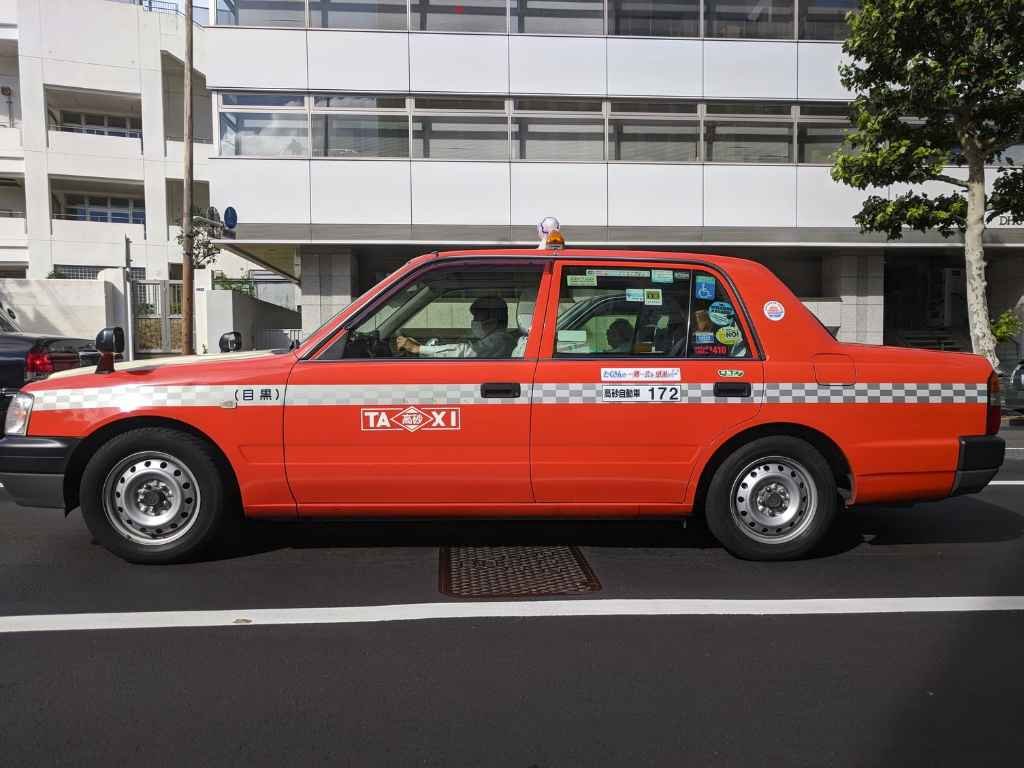
A taxi in Tokyo
How does the CRAPP look in reality?
Let's take a hypothetical piece of advice and put it to the CRAAP test:
"The cheapest way to get from Sydney Airport to the city centre is to catch the airport express train. It costs $10 and takes 40 minutes. But the quickest is taking a 15 minute taxi ride witch only costs $25."
Is it current, relevant, authoritative, accurate and what is the purpose of the post?
Suddenly, there are quite a few things to investigate.
Is the ticket price still current? The advice doesn't tell us which Sydney airport they're talking about, now that Sydney has both Sydney Airport and Western Sydney International Airport? Does the train stop near our our accommodation? Does the author have a relationship with a taxi company?
None of those things necessarily means the original advice was deliberately misleading. It might simply be old, incomplete or based on circumstances that don't match ours. That's the useful thing about the CRAAP test. It doesn't require you to decide that something is good or bad. It encourages you to stop and ask a few questions before you rely on it.
I know this process looks like a lot to remember, but I promise that if you practice it a few times, it really does become second nature when you’re evaluating online information.

Bronze sculptures outside of the Musée d'Orsay in Paris (note the Invader in the background)
Different sources, different shelf life
Even with the CRAAP test, don’t plan on getting all of your information from one (or even three) sources. None of these are bad or wrong to use, they each just have their own specific strengths.
Government websites - Good for entry requirements, travel advisories, official regulations and other authoritative information. Not necessarily the best source for deciding whether a neighbourhood is interesting.
Reddit and online forums - Excellent for recent traveller experiences and questions you didn't know to ask. Remember that individual experiences aren't universal truths.
Blogs- This, like Reddit, can be great lived experience from travellers. The thing to be cautious about are blogs that are AI-generated "slop" blogs, sites, and fake pages, they are growing and may not have the most up to date information. Can you verify the authors?
YouTube and social media - Useful for seeing places, understanding layouts and getting a feel for experiences. Be alert to editing, sponsorships, outdated footage and the difference between entertainment and practical advice.
AI-generated information - Useful for brainstorming, summarising and identifying questions to investigate. It can also confidently present incorrect information, invent details or rely on outdated material. Always verify claims against original sources.
Be curious, but be critical
The internet has made researching travel easier than ever, but with the sheer volume, it can be harder to know what to believe. You don't need to become a professional researcher to plan a good trip, you just need to develop the habit of asking a few questions before acting on the information you find.
Who wrote this? When? Why? Does it apply to me? Can I check it somewhere else? And perhaps the most important question of all: does this actually make sense?
Because the best travel advice isn't necessarily the advice with the most views, the prettiest photographs or the most confident author. It's the advice that stands up to a little scrutiny.
