

Choosing a hotel room isn't just about finding the cheapest one or the one with the highest rating. Every trip is different, and the "perfect" space for a weekend city break might be completely wrong for a three week holiday.
After spending three months this year across 18 hotel rooms and cruise cabins, we realised that every booking came back to the same handful of questions. They're not complicated, but they've helped us spend our accommodation budget on the things that actually matter to us.
1. How long are you staying?
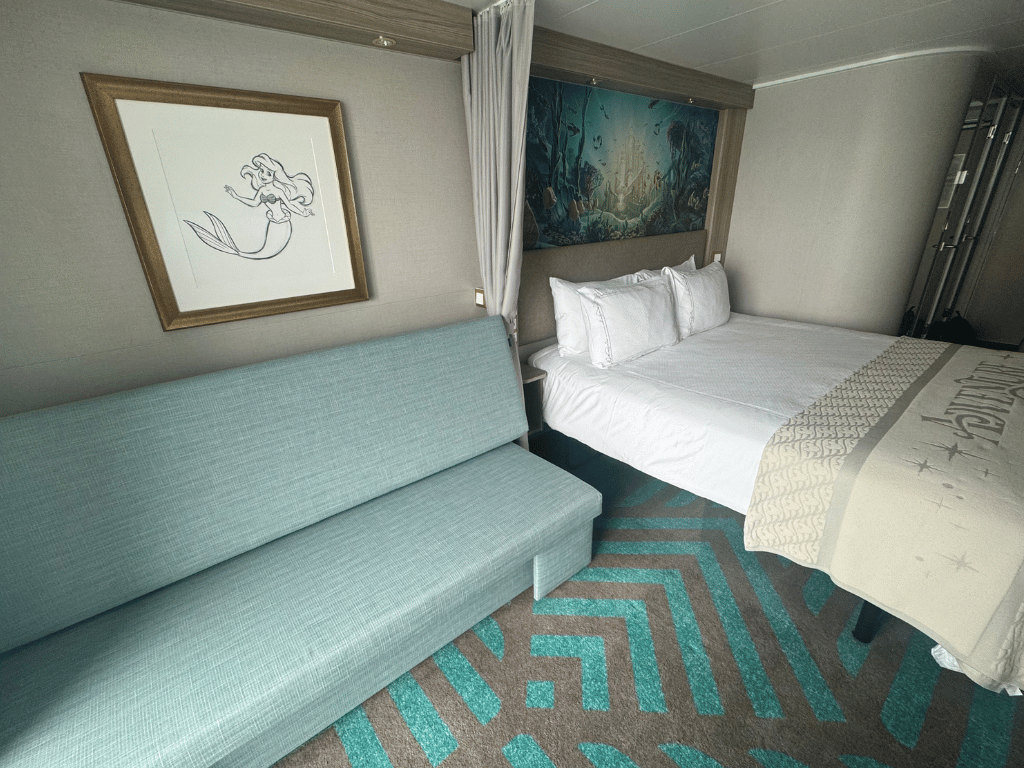
The length of your stay changes what matters. For a night or two, we're usually happy to compromise on room size if the location is perfect. For a week or more, we're much more interested in having enough space to unpack, relax and settle in. Spending a little more for a larger room, or staying slightly further out if it gives us more room to live, can be well worth it.
2. What amenities will you actually use?
Hotels love advertising rooftop pools, spas, gyms and cocktail bars. The question we ask ourselves is simple: "Will we actually use this?"
We ask ourselves what we'll actually use every day. A washing machine, a kettle, a fridge or a microwave often add far more value to our trip than a rooftop pool we'll admire once before never visiting again.
One thing we've learned is to read the fine print. Some hotels advertise "laundry" when they really mean an expensive laundry service rather than guest washing machines. I always try to opt for machines IN the room which sometimes means stalking room photos online.
3. Is there enough room to live?
We've stayed in rooms where opening both suitcases meant creating an obstacle course just to reach the bathroom. This is something we've only started paying attention to after travelling with larger suitcases. Two people with hard-sided clamshell suitcases need considerably more floor space than people travelling with backpacks. If both suitcases have to be opened on the floor, can you still walk around the room?
Storage matters too. A wardrobe, a few drawers and a few hooks in the bathroom can make a room feel much less cluttered after a few days. Don't overlook a bedside table with a drawer either. It's surprising how quickly somewhere to keep glasses, chargers and a book helps a room feel organised.
One tip is that most rooms have an ironing board in a closet somewhere. That can be used as an impromptu suitcase table.
4. Will you be managing jet lag?
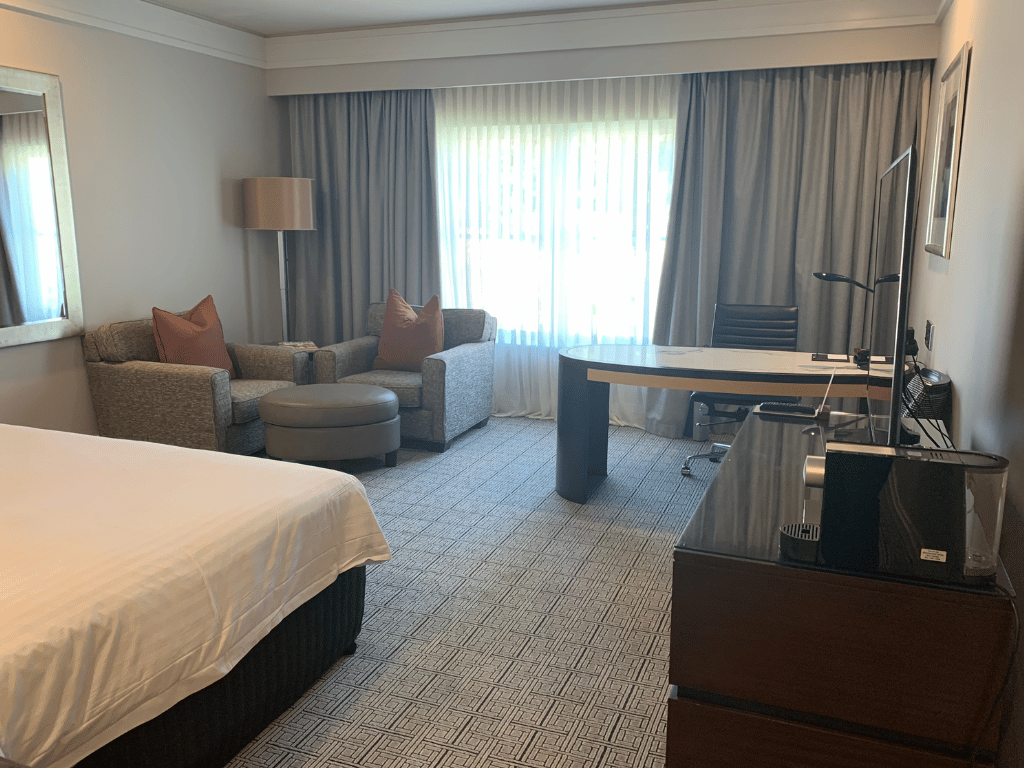
One thing we've learned after flying between Sydney and London several times is that a separate bedroom might sound like a luxury until you're both awake at completely different times thanks to jet lag. If one person is ready to start the day at 4:00 am while the other is trying to sleep, having a lounge area means someone can read, work or watch television without disturbing everyone else. It's not something we look for on every trip, but after long international flights we've found it can be worth paying a little extra.
A few other things to consider
Power points. Especially beside the bed. This can be tricky to figure out from photos, you can sometimes find this out from reviews.
Check-in time. An early check-in can sometimes be worth paying for after an overnight flight. But don’t be afraid to ask. We had one hotel let us use one room to shower and store our luggage until our regular room was ready to roll.
Air conditioning. Depending on where and when you're travelling, this can move from "nice bonus" to "absolute necessity." So glad we had this in Barcelona and Singapore.
Doing the research
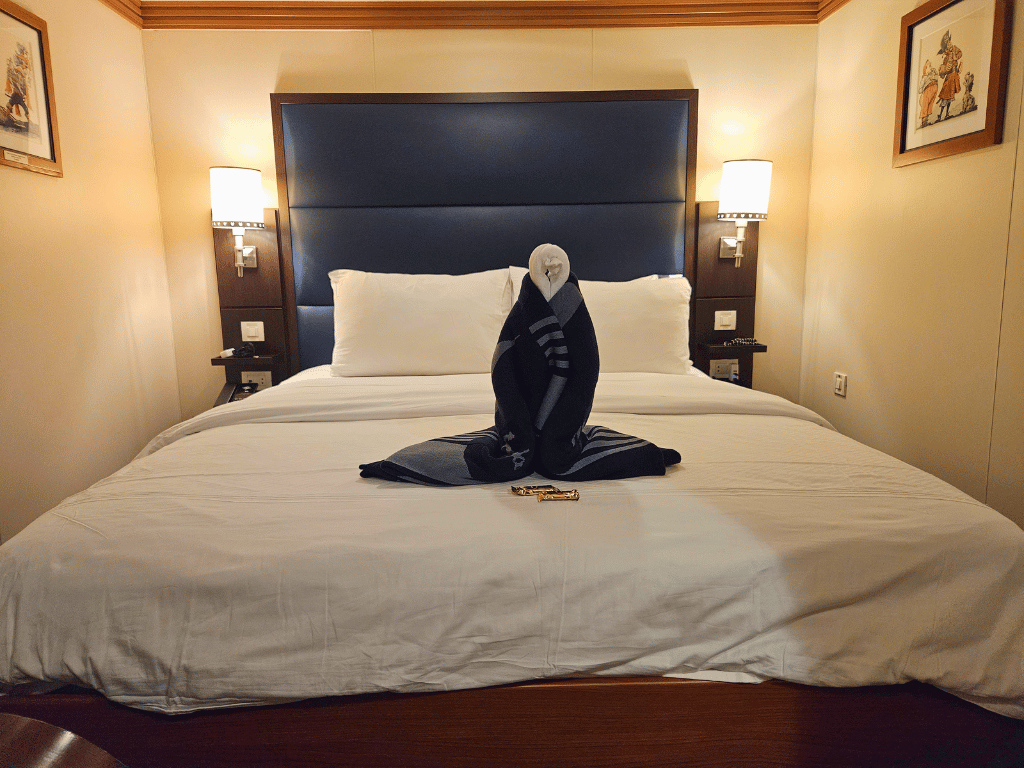
When I'm researching a hotel, I don't spend much time reading the glowing five-star reviews or the furious one-star reviews. Instead, I head straight for the middle.
Three-star reviews often tell you the most. These guests generally had a perfectly acceptable stay, but they're also more likely to mention the little frustrations. Maybe the rooms are smaller than the photos suggest, the air conditioning struggles in summer or the soundproofing isn't great.
The trick isn't looking for perfection. It's deciding whether those criticisms would actually bother you. A noisy street might be a deal-breaker if you're a light sleeper, while a tiny room may not matter if you're only there to shower and sleep.
Most importantly, look for patterns rather than isolated complaints. One person reporting slow Wi-Fi could simply be unlucky. If dozens of reviewers mention poor soundproofing or uncomfortable beds over several months, that's probably telling you something worth paying attention to.
Final thoughts
The best hotel isn't the one with the biggest pool or the fanciest lobby, and the cheapest room isn't always the cheapest stay. A slightly more expensive room that includes breakfast, laundry facilities, a kitchenette or simply enough space to unpack can easily save you money and make your trip far more comfortable.
Every traveller values different things, and that's exactly the point. Once you know what matters most to you, comparing hotels becomes much less overwhelming. After all, for a few days, or sometimes a few weeks, your hotel isn't just somewhere to sleep. It's your home away from home.
Picking a room type is one thing, but selecting a hotel location is another thing. Read more about how we go about it in this post: Maps before hotels: Planning your days before your nights.
