Oodi and Kiasma: two nerdy Helsinki culture stops in one
How to visit Oodi and Kiasma in one easy Helsinki itinerary stop
We arrived in Helsinki armed with a wildly optimistic Google Map full of pins. Breweries, bakeries, public art, museums, libraries. The kind of map that assumes you have three weeks instead of three days. At the hotel, we opened up our map we realised we were walking distance from Oodi Central Library. Culture was at our doorstep.
Oodi
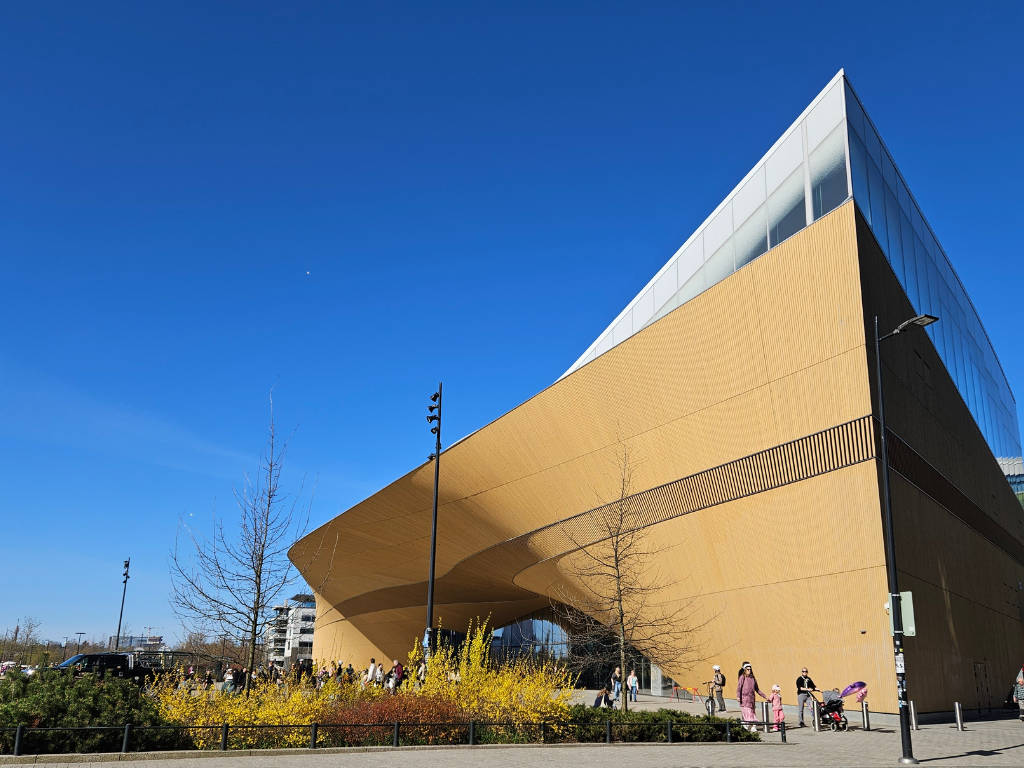
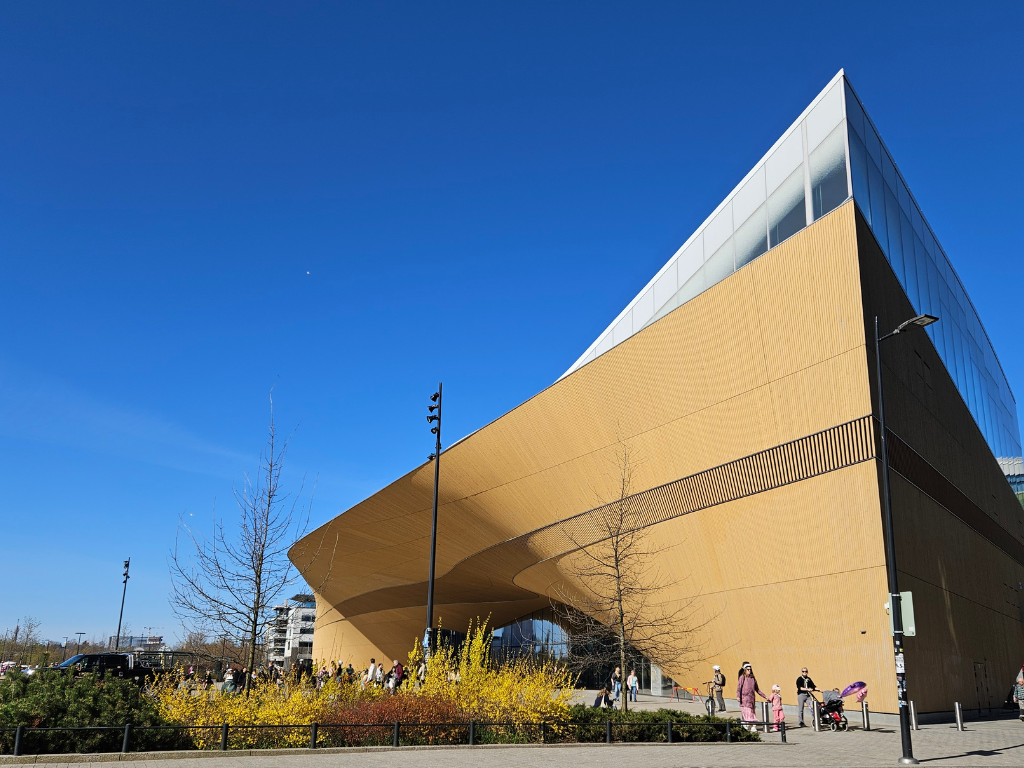
Having opened in December 2018, Oodi doesn’t so much sit in the city as it invites you in. The sweeping façade curves upward like a wave paused mid-motion, and it’s already collected a shelf full of architecture and design awards. Standing outside, it’s easy to see why.
“Oodi” translates to “ode” a poetic tribute and the name itself was chosen from public submissions. It feels fitting.
Inside, the building works like a carefully layered story. (No pun intended). The ground floor is all movement. Events, conversations, the café hum. The second floor shifts into making and doing. Workshops, studios, and spaces where people quietly (or not so quietly) create things.
And then there’s the third floor.
This is what locals call “book heaven,” and it’s where the building really lands. The space opens up into a bright, cloud-like expanse of books, curved lines, and soft light. The floor plan narrows at each end like the hull of a ship, with a children’s area at one tip and a sloping lounge at the other where people stretch out with laptops, novels, or, in at least one case, a carefully staged vlog.
Rows of books span multiple languages, but it’s the details that make you linger. Full-sized indoor trees soften the white interior. Sunlight spills in through vast windows. And then, quietly trundling along, the library robots glide past carrying stacks of returned books. They’re so beloved they’ve made it onto postcards. Yes, really.
Oodi is designed as a non-commercial “living room” for the city, and it genuinely feels that way. People meet, nap, read, work, and just exist here without the expectation of buying anything. In a city where costs can add up quickly, that feels quietly refreshing. There is a reason why we always include libraries in our trips.
Kiasma
Just across the open plaza sits Kiasma Museum of Contemporary Art, making this one of the easiest cultural double-ups you’ll find.
Opened in 1998, Kiasma takes its name from “chiasma,” a crossing or intersection, and the building leans into that idea. Inside, it’s all ramps, light, and shifting perspectives. You enter, look up toward the skylights…and for a moment, there’s no art in sight. Just space, quietly setting the tone.
We paid €23 (about $37 AUD) per person and headed straight to the top floor, letting the exhibitions unfold as we worked our way down.
The collection leans heavily toward Finnish artists, with international works woven through. There’s a noticeable presence of female artists, and the curation feels deliberate without being heavy-handed. Some pieces land immediately. Others take their time. A few never quite click. That’s contemporary art doing its thing.
The exhibition that stayed with me was We Who Remain, created in collaboration with the Sámi Museum Siida. It brings together more than 20 artists and spans works from the 1970s to today, exploring Sámi identity across the Sápmi regions of Finland, Sweden, and Norway. It’s layered. Textural. Political at times. Themes of land, colonialism, and cultural connection run through the works, and it’s the kind of exhibition that lingers long after you’ve left the building.
The building itself becomes part of the experience. Oversized doors, sweeping ramps, and flashes of the city through glass panels give you moments to pause between exhibitions. It’s an easy place to spend a couple of hours, especially when Helsinki’s weather decides to shift without notice.
What makes this pairing particularly satisfying is how close everything is. Oodi and Kiasma back onto each other across a broad plaza, and both are within easy walking distance of Helsinki Central Station and the Kamppi bus terminal. No complicated logistics, just a short wander between two very different takes on culture.
Kiasma rotates exhibitions regularly, and the experience can vary a lot depending on what’s showing.
Weather strategies
One thing we did discover about Helsinki was the weather was, well, unpredictable. This pairing works beautifully as a weather-proof plan:
Cold? Warm up inside Oodi
Rain? Move between the two in minutes
Wind? Hide out in Kiasma
Sunny? Relax on the tiered seating between the two buildings to soak up that valuable UV
Notes for travellers
Oodi is free to enter, and while you can’t get a library card without a Finnish address, there’s plenty to enjoy without joining.
It’s one of the most genuinely useful stops in the city:
Free Wi-Fi
Clean, well-maintained bathrooms
Children’s play areas
Two cafés (though you can bring your own food within reason)
Power points are everywhere (a gift to travellers)
Seating is deliberately varied, from structured desks to lounge nests
We brought a simple lunch and ate upstairs on the third floor, watching the city through the windows. No rush, no pressure to move on. If the weather cooperates, the third-floor balcony is worth stepping out onto for a look over the surrounding area.
At Kiasma, your entry ticket covers all exhibitions, with no extra fees for special shows. If your timing is flexible, they also offer free admission on the first Friday of each month. Something to note in one of those expensive cites in the world.
Have you been to Helsinki? Did you spend time at these two icons? Let us know how you found them. We’re at Pinterest and Insta.