

Is Drøbak worth a day trip from Oslo outside Christmas?
When you're staying in Oslo, there is no shortage of things to keep you busy. You can walk on the roof of the Opera House, see multiple versions of Munch's The Scream, visit a stave church at Norsk Folkemuseum, or spend an afternoon enjoying Oslo's many saunas.
And then there's Drøbak. About a 40 minute drive south of Oslo, this little town on the Oslofjord has one particularly unusual claim to fame: 1440 Drøbak is the official Norwegian address of Santa Claus. That makes Drøbak an obvious day trip at Christmas. But what if you're visiting Oslo in spring as we were?
We headed to Drøbak to find out whether there was enough to see and do when the Christmas lights weren't glowing. How much Christmas is actually left outside December? What else is there to see? And, most importantly, is Drøbak worth giving up part of an Oslo day for?
Why does Santa live in Drøbak anyway?
Let's start with the obvious question. Why does a small town on the Oslofjord have an official address for Santa Claus?
The story goes back to 1947, when Norway sent its first Christmas tree to Trafalgar Square in London as a thank you for Britain's help during the Second World War. According to the story told in Drøbak, the BBC subsequently proclaimed this proof that Father Christmas came from Norway. Letters to Father Christmas began arriving in Norway, and Drøbak eventually claimed the honour of being his official home.
The final bit of the story is wonderfully bureaucratic. On 18 December 1989, the local municipal council made the following determination:
“As far as the chairmanship knows, the Norwegian Santa Claus must be born in Drøbak. Until proven otherwise, this is considered an accepted fact with the consequences this may have in practice.”
And there you have it. As far as the Norwegian municipal government is concerned, Santa lives in Drøbak unless someone can produce the paperwork proving otherwise.

How much Christmas is there outside Christmas?
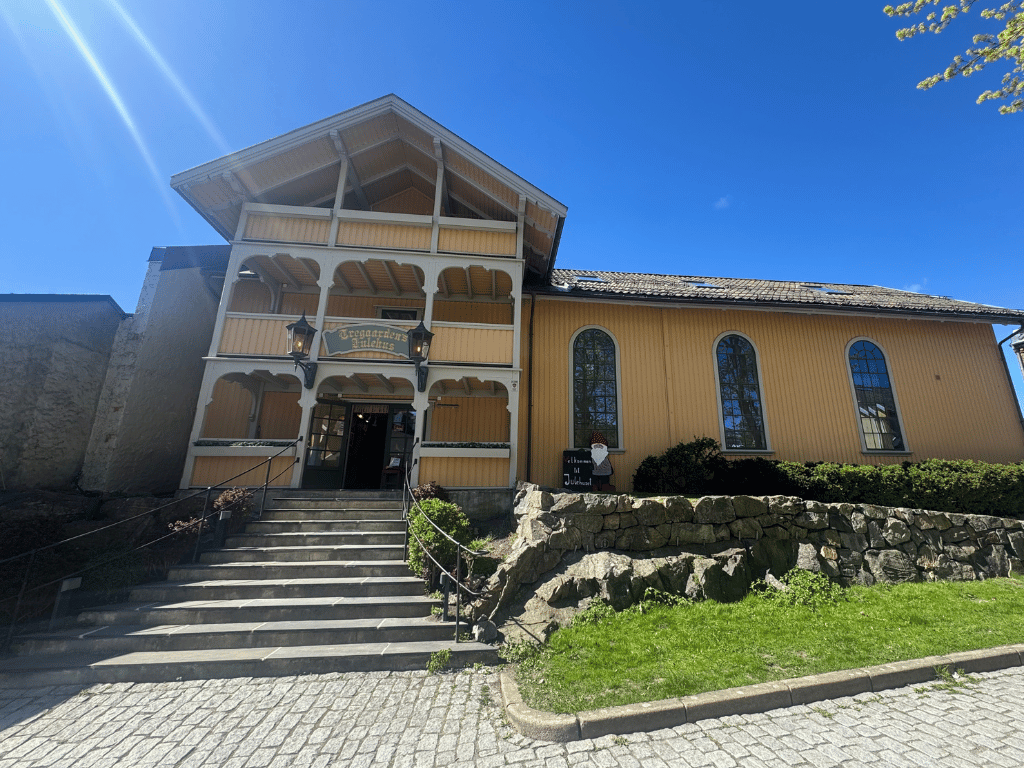
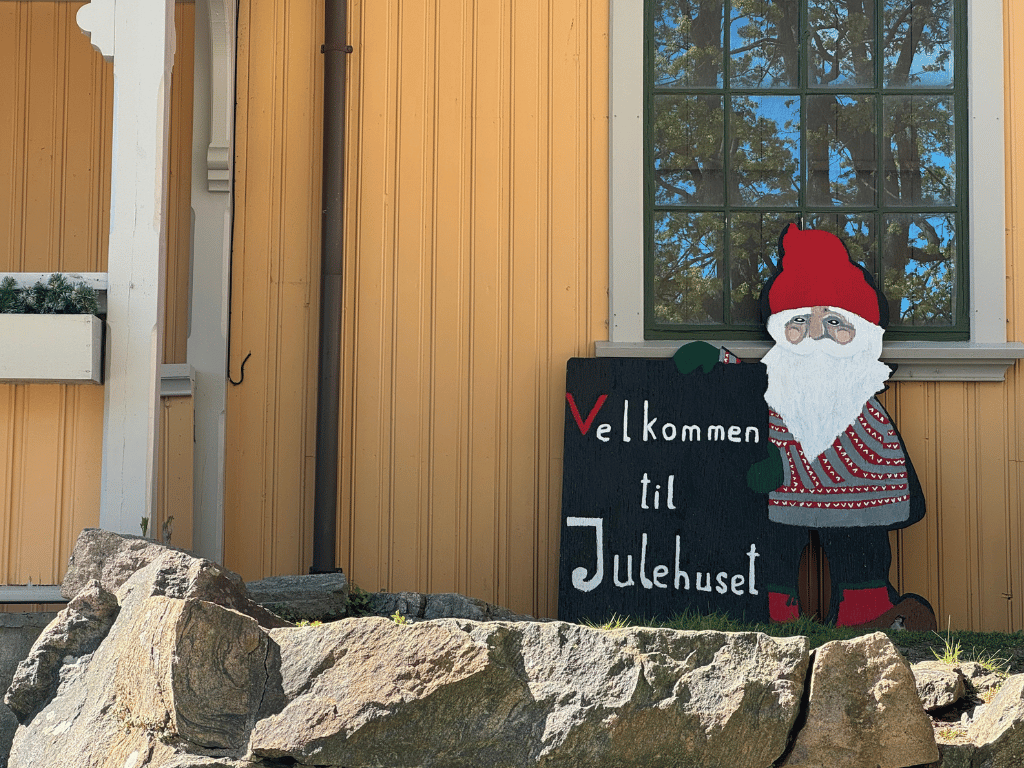
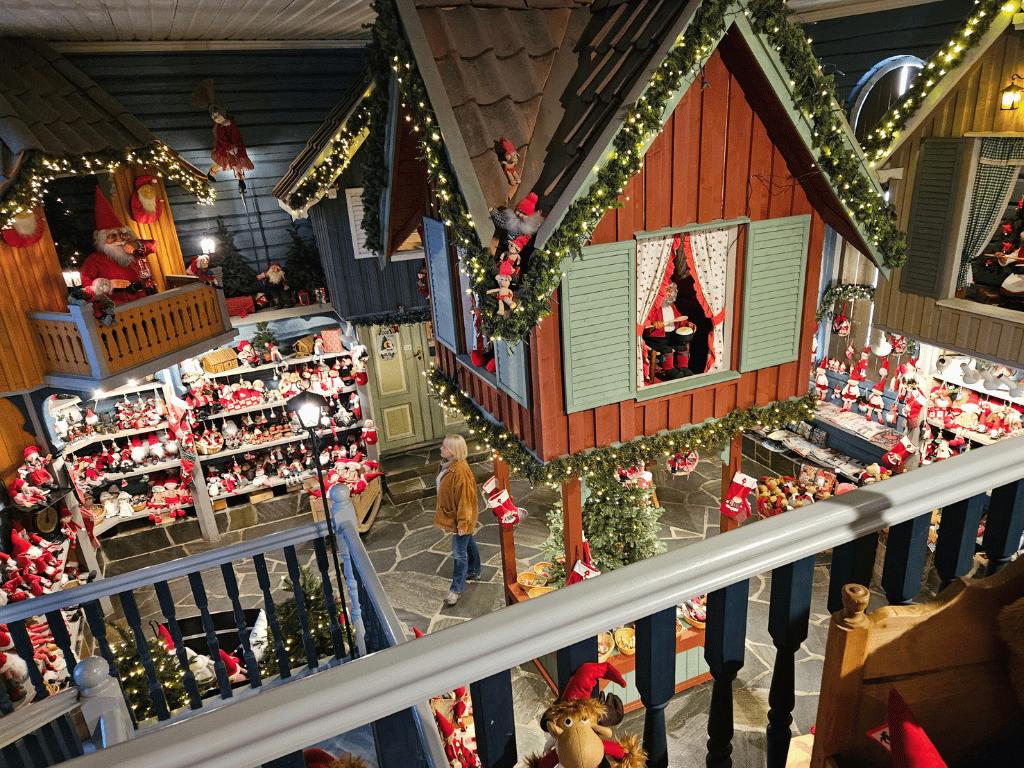
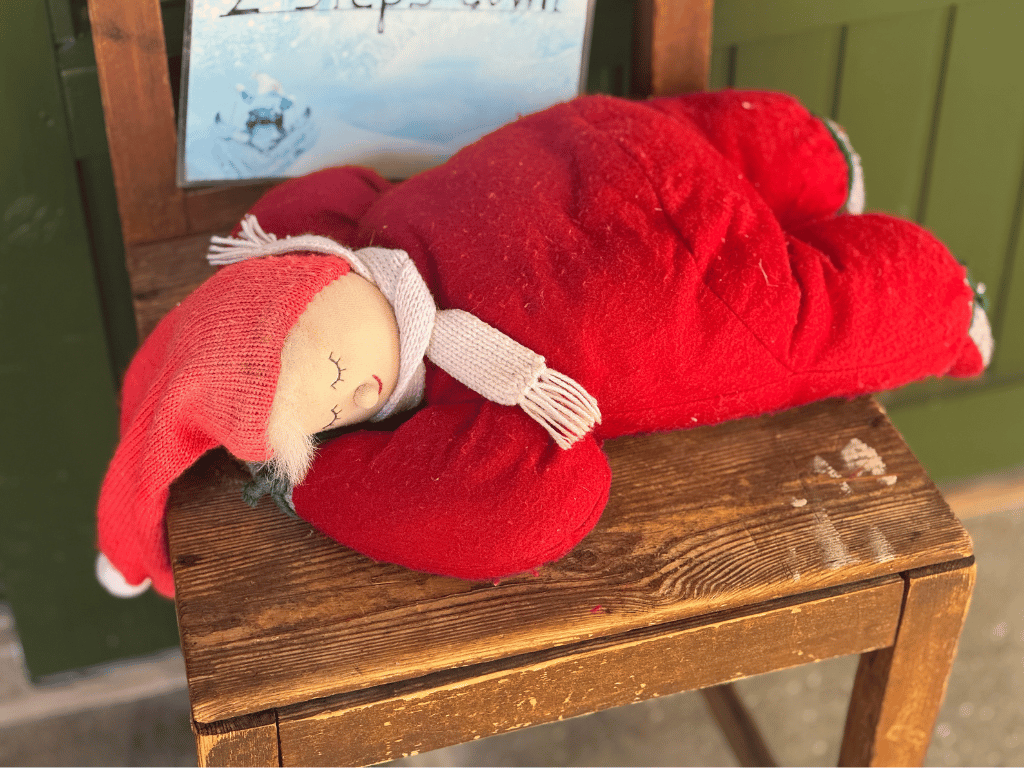
Drøbak's Christmas credentials aren't just a December marketing exercise. Tregaardens Julehus, usually known simply as Julehuset, is a year-round Christmas shop in the centre of town. It also houses Santa's post office, the place where mail addressed to Father Christmas in Norway ends up. The Christmas house is promoted as a year-round attraction, so even our spring visit included a little festive detour. You'll also find the famous Santa signage around town, which I must say, did feel a little out of place on the beautiful Spring day we were in Drøbak.
What you won't get is the full Christmas-town transformation. In December, Drøbak gets Christmas lights, decorations, events and its famous pre-Christmas atmosphere. Outside the Christmas season, the town is much more restrained.
Getting to Drøbak from Oslo by public transport
We like using public transport whenever we can, and Drøbak is an easy trip from Oslo without a car. Ruter operates regular buses between Oslo and Drøbak. The direct connection takes roughly 45 minutes, depending on traffic and where you board. The 500 bus takes you directly there.
Tickets can be purchased through the Ruter app or using a physical travel card, and Ruter tickets can be used across its buses, trams, metro and boats within the zones covered by your ticket.
🚌 Travel tip: If you're taking the bus from Oslo to Drøbak, sit on the right-hand side if you can. You'll get some lovely views as you head towards the Oslofjord.
You can also take the ferry. This is the option we missed. Ruter operates boats between Aker Brygge and Drøbak, but the service is seasonal rather than a year-round replacement for the bus. The current arrangement includes weekend services in spring and autumn and more frequent service during the summer season.
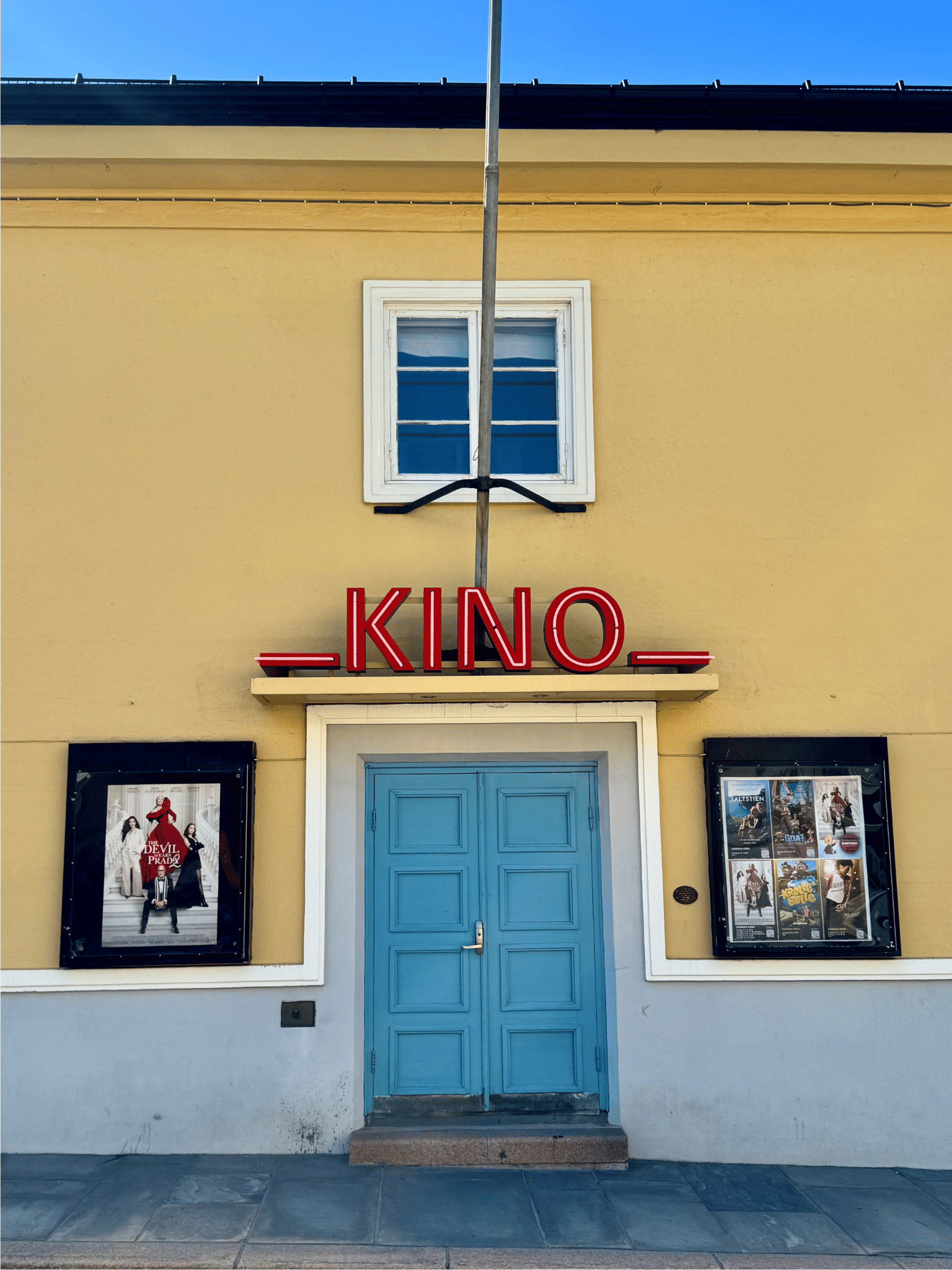
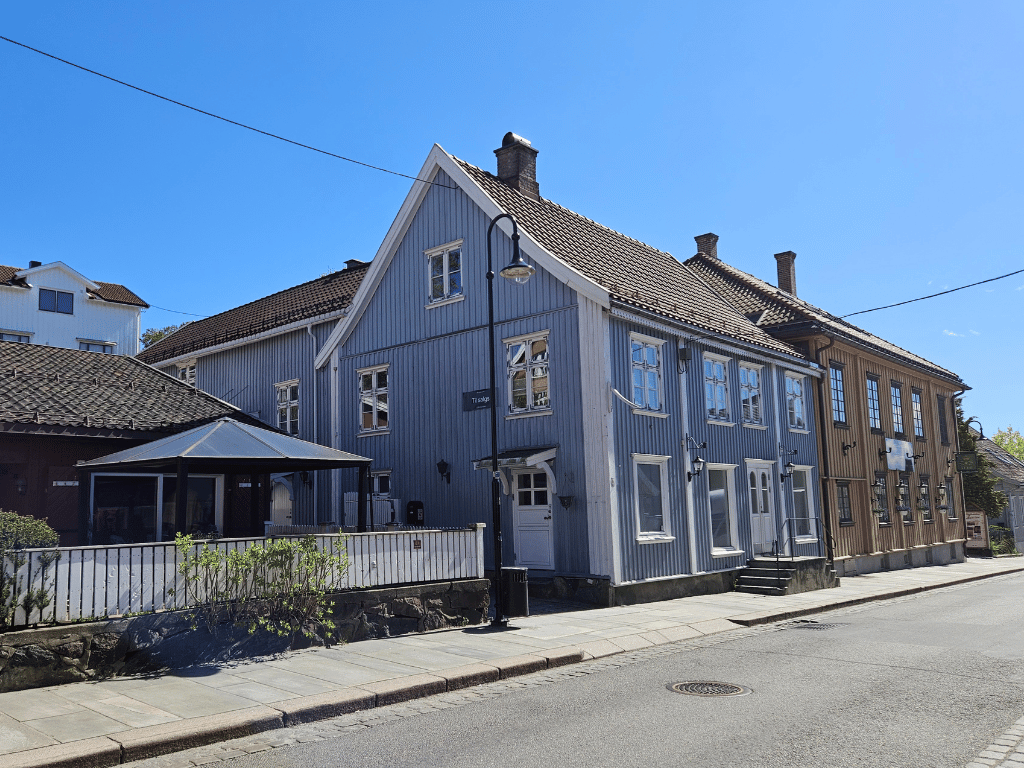
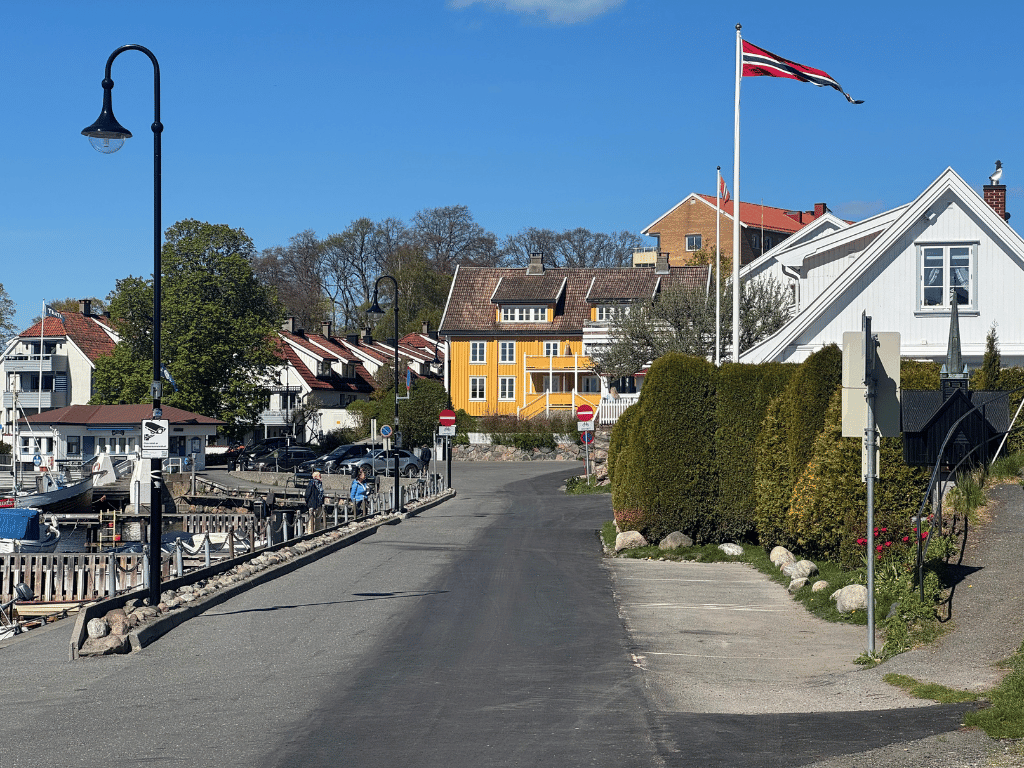
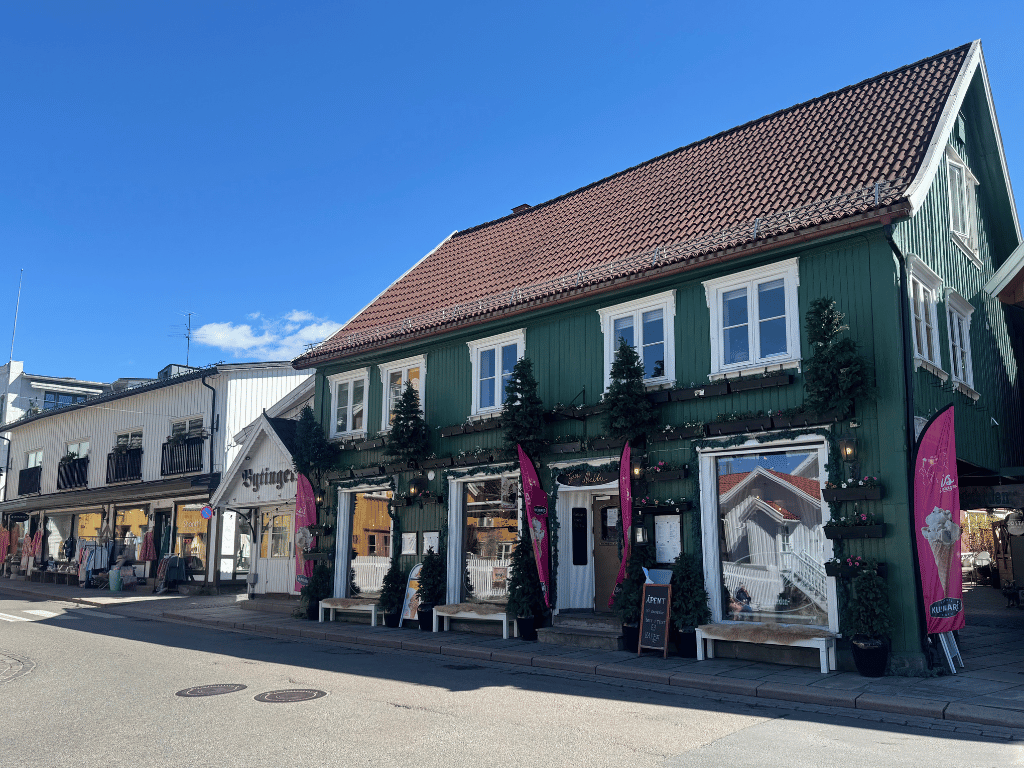
Drøbak is much more than Christmas
Drøbak is one of the better-preserved wooden towns around the Oslofjord, with a long history as a trading and maritime town. Its steep streets are lined with traditional wooden houses, and the town developed into a seaside resort in the late 19th century. And honestly, that's the appeal.
There is a slower rhythm to it. And after several days of city sightseeing, that was a pretty good reason for us to leave the city. Drøbak's waterfront is the obvious place to really slow the pace. The marina is surrounded by the sort of views that make you understand why this became a summer destination for people from Oslo.
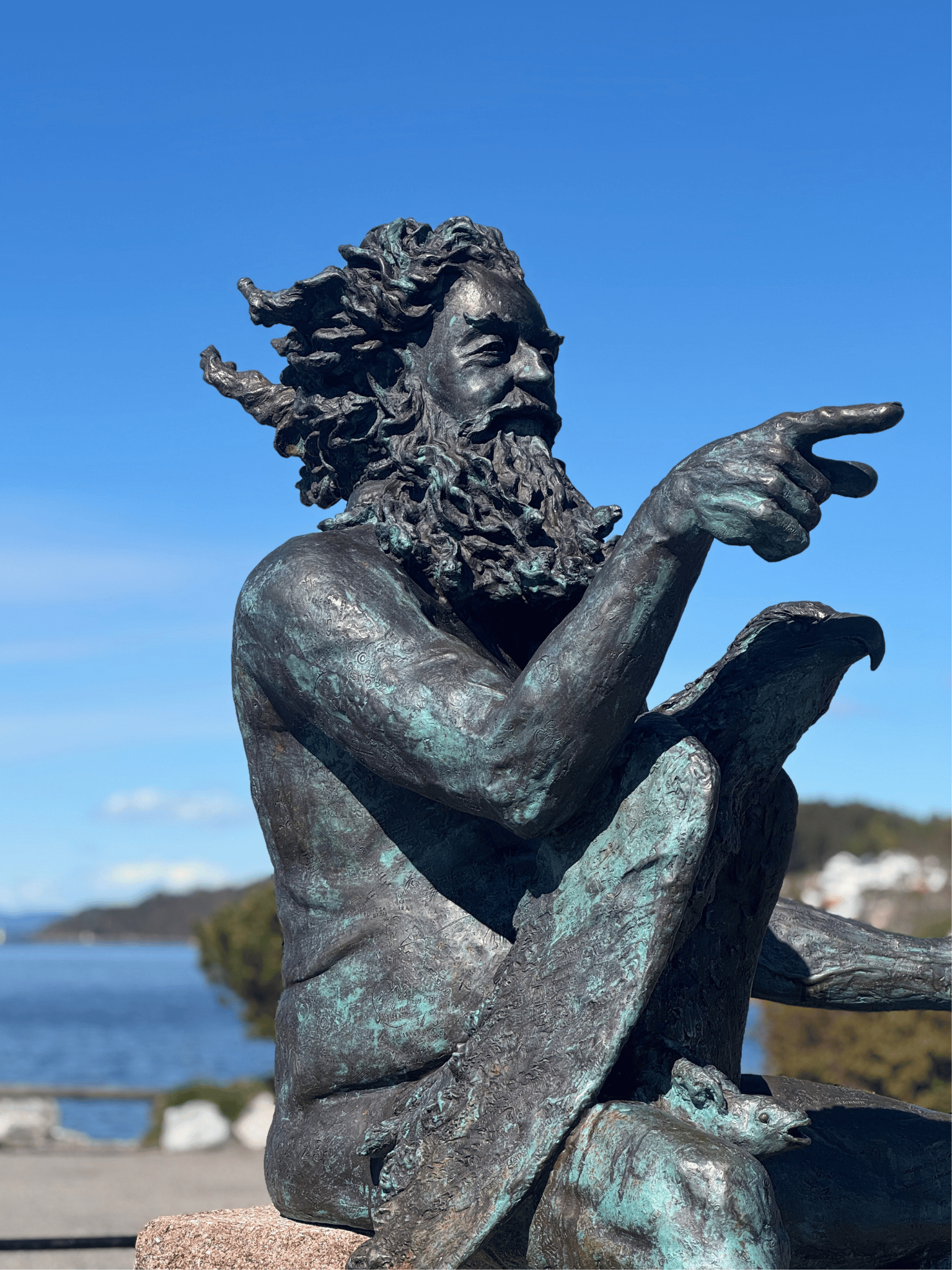
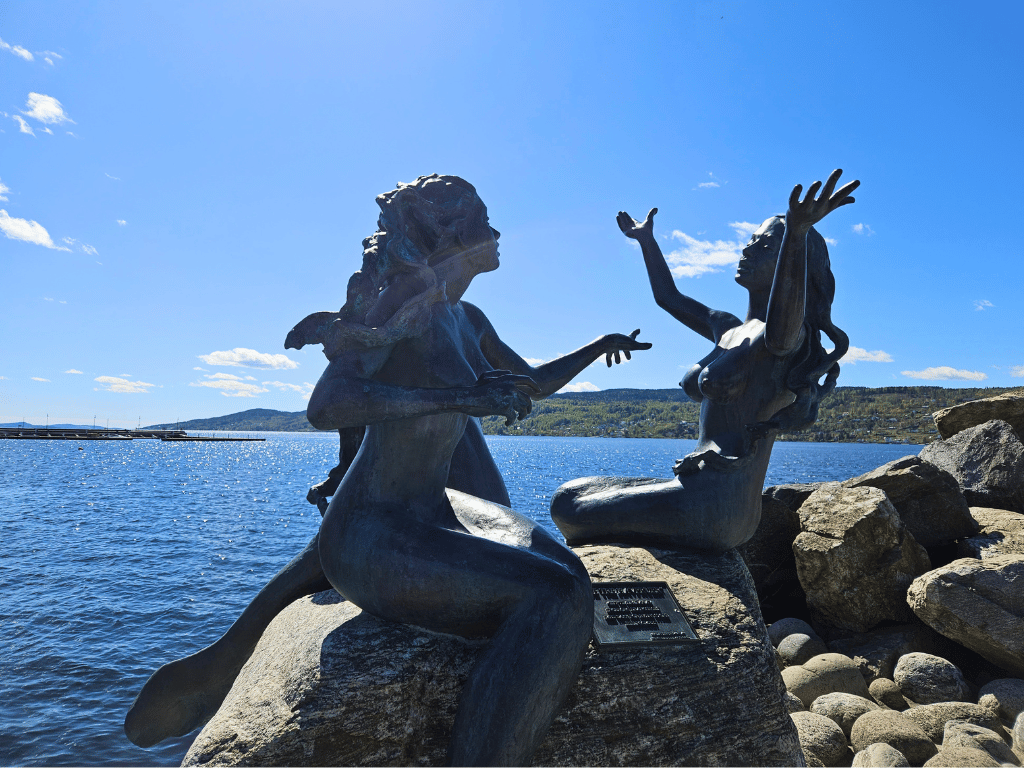
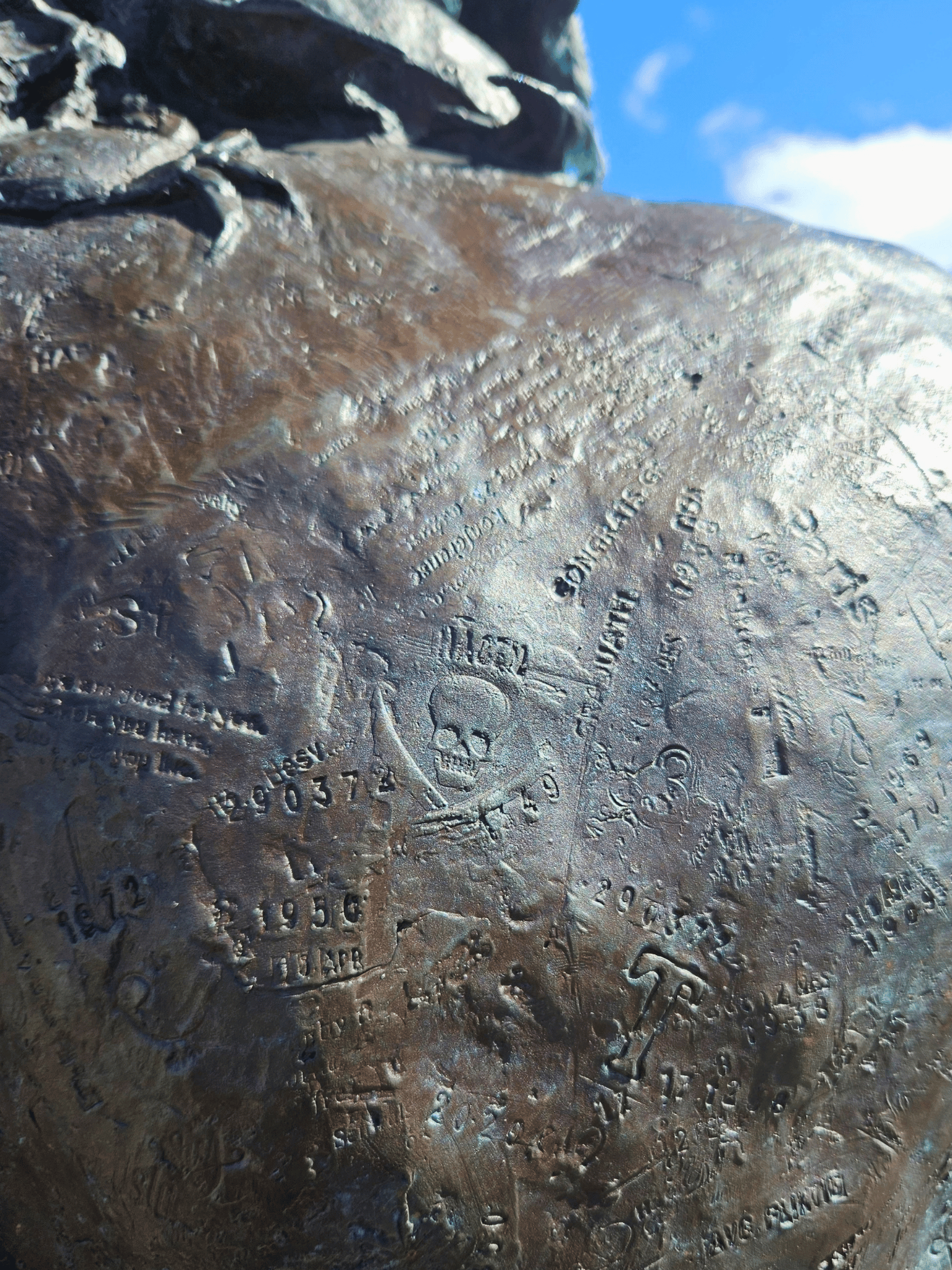
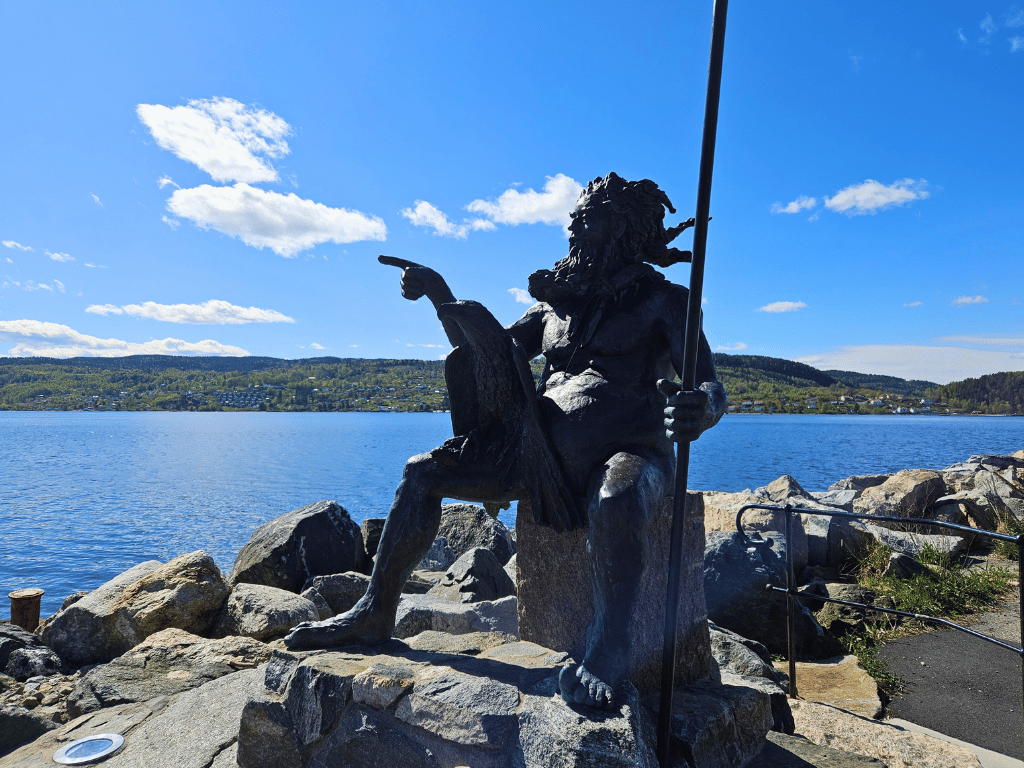
There's also some public art to look out for: a bronze sculpture of three mermaids sitting on a rock by the marina, created by Reidar Finsrud and a sculpture of Neptune that includes carvings of the zodiac signs, engravings of Drøbak and apparently a hidden self-portrait of the artist. We took advantage of the views at the marina and brought a picnic lunch with us and ate it by these sculptures.
What about a port day visit to Drøbak?
The town is a popular excursion for cruise passengers visiting Oslo, and it is quite doable as a self-guided port day excursion using public transport depending on how long your ship is in port.
If you are cruising into Oslo for a second or third time, Drøbak could be a great option. Allow around five hours for the outing (roughly an hour each way for transport and about three hours to explore Drøbak). That gives you time to wander the town, see the Santa sights, explore the waterfront and stop for lunch. If that ferry is running from Oslo, you will get to see some of the smaller waterways too, bonus!
We went on a weekday, partly because we wanted to avoid the crowds, and that worked well for us. If you're visiting during a busy cruise day, particularly in the warmer months, you may find the town considerably livelier.
Santa stop here? Even the street signs are for Santa in The seaside streets of Drøbak
So, is Drøbak worth a day trip from Oslo when it’s not Christmastime?
For us, yes.
We went to Drøbak primarily because of the Santa connection. We wanted to see what was left of the Christmas capital and yestThere was still plenty of Christmas. Julehuset was open, Santa's post office was there, and we found the obligatory Santa signage. But once we'd had our Christmas fix, we discovered that Drøbak didn't really need Santa to justify the trip.
The old wooden buildings, waterfront, little shops, galleries and harbour made it a lovely place to wander. More than anything, Drøbak gave us something we hadn't realised we needed: a slower morning. Oslo is a fantastic city to explore, but Drøbak felt like a chance to turn the volume down for a few hours. So if you're visiting Oslo outside the Christmas season, don't rule out Drøbak just because the Christmas lights aren't on.
If you're looking for a packed itinerary of major attractions, there probably isn't enough here to fill an action-packed day. But if you like historic wooden towns, waterfront walks, independent shops, galleries and the opportunity to slow down for a few hours, Drøbak is worth the trip.
Drøbak TL;DR
🚍 Getting there: About 45 minutes from Oslo by bus
⛴️ Alternative: Seasonal ferry from Aker Brygge
🎄 Christmas: Still happening, even outside December
🏘️ Why go: Old wooden houses, waterfront, shops, galleries and seaside-town charm
⏱️ How long: A relaxed morning worked well for us
🍱 Our tip: Bring a picnic and enjoy the marina
