Belgium Calling: A Guide to Wild & Spontaneously Fermented Beer in Australia & New Zealand
When I was younger, I don’t think I ever imagined Belgium would exert such a pull on me. Yet for a beer lover, it looms large. Belgium birthed so many great beers, and a week in Brussels or Antwerp (and their surrounds) is a fine way to dive into a dunkel, tipple on a tripel, or while away the hours with a witbier.
Belgium is also the spiritual home of lambic, gueuze, saisons, and spontaneous fermentation. With a return trip locked in for this year, those beers have been very much on my mind. Is my palate ready? How’s my funk tolerance these days? Is one human really meant to dive head-first into quite that much acidity? Rather than waiting for Brussels, I found myself looking closer to home.
Because once you start paying attention, it’s clear that brewers and blenders in Australia and New Zealand aren’t simply imitating Belgian styles. They’re interpreting Belgian tradition through local climate, wild yeast, and native ingredients. They are creating beers that nod to Europe’s great brewing heritage while very much speaking in an accents closer to my own.
What is a “wild ale”?
A wild ale is a beer fermented using wild yeasts or bacteria, rather than a single, standard brewer’s yeast. Known for their unpredictable and complex flavours, wild ales are often described as funky, earthy, tart, or fruity. Styles commonly associated with wild ales include saisons and spontaneously fermented lambics, though you could argue these are less rigid styles than brewing approaches.
While wild ales are often sour or tart, they aren’t quite the same as modern “sour beers.” Many sour beers are fermented with clean brewer’s yeast and then intentionally soured using specific bacteria. In wild ales, those sour and funky flavours develop naturally from the mixed or uncontrolled microbes involved in fermentation.
KEY TERMS IN WILD ALES
Wild Yeast: Naturally occurring yeasts and bacteria found on plants, fruit skins, in the air, and on brewery surfaces, which drive fermentation in wild ales and contribute to their sour, funky, and complex flavours.
Saison (say: seh-ZON): French for "season". A saison is a light, dry, and highly carbonated Belgian farmhouse beer, known for its fruity and gently spicy flavours. Originally brewed for farm workers, it’s refreshing, complex, and often finished in the bottle to add extra character.
Lambic (say: LAM-bik): A traditional Belgian beer made using spontaneous fermentation, where wild yeast and bacteria from the air do the work instead of added brewer’s yeast. Brewed around Brussels, lambics are typically dry, tart, and complex, and form the base for beers like gueuze and fruit lambics.
Gueuze (say: GURZ or GOOS): A blend of young and aged lambics, bottled to undergo a second fermentation. Often described as the “Champagne of Belgium,” gueuze is lively, acidic, and deeply complex.
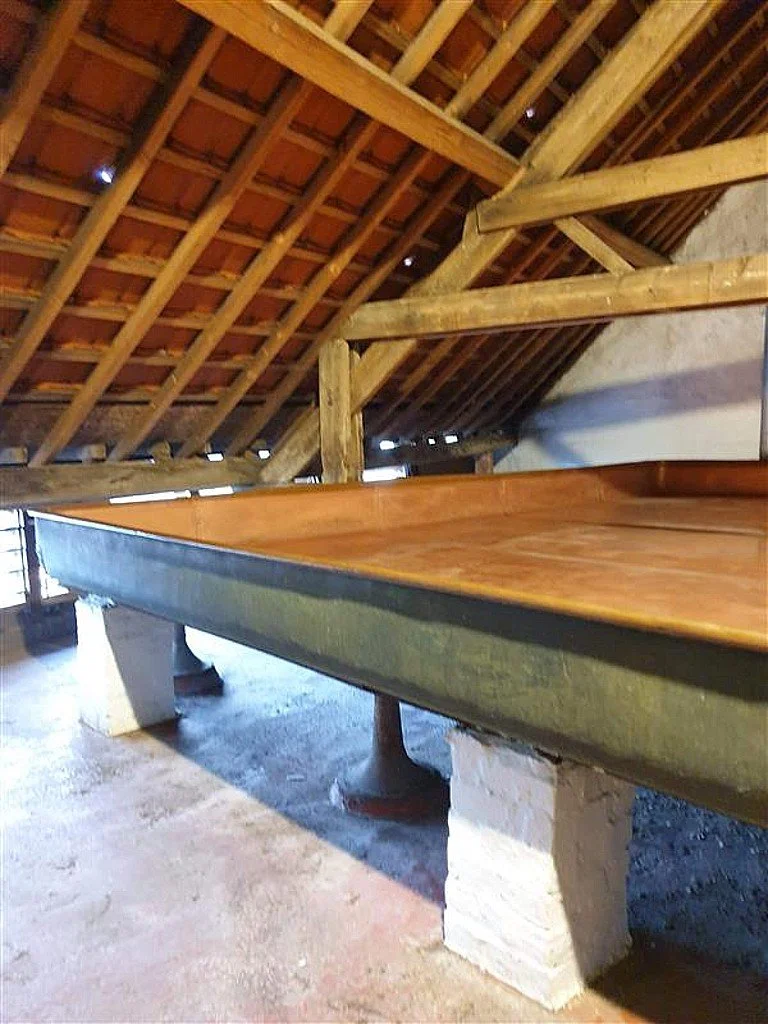
Coolship: Or koelschip. A large, shallow, open-topped vessel (usually copper) used to cool the hot wort and capture wild yeasts and bacterias in the air to encourage spontaneous fermentation.
Belgium as the blueprint
When we stepped off a train in Brussels a few years ago, we made a beeline straight for Cantillon Brewery & Museum. Apart from anything else, these iconic lambics provide the blueprint by which wild ales are often judged, with their gueuze widely considered a benchmark for the style.
Belgium’s wild ale tradition also stretches beyond Cantillon, from the lambics of 3 Fonteinen and Boon to classic farmhouse saisons from Dupont Brewery or Fantôme. Many drinkers take their next step via Flanders Red ales like Rodenbach Grand Cru — a blend of young and old beer aged in massive oak barrels called foeders — before diving deeper into funk and acidity.
In Australia and New Zealand, brewers have taken those ideas and reshaped them through local climate, ingredients, and microflora. The approach may be similar, but the flavours are distinctly our own.
Wild Ales in Australia
Wildflower Blending and Brewing (NSW)
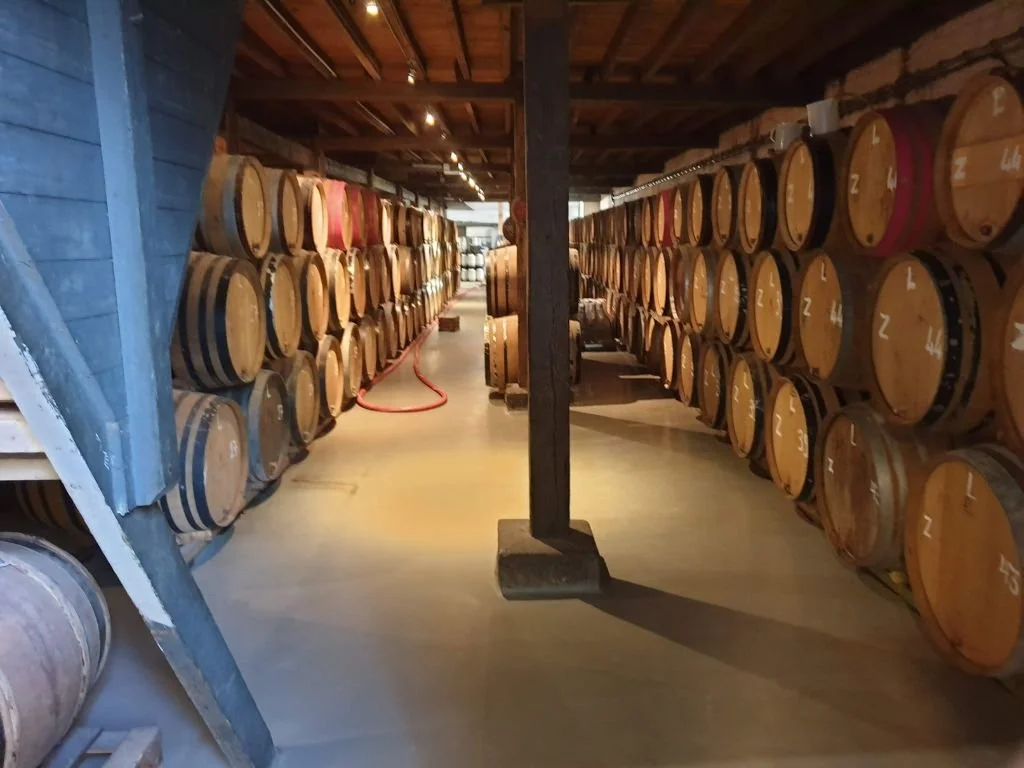
A personal favourite. With floor-to-ceiling barrels and a coolship right in the heart of Marrickville, Wildflower immediately marks itself as Australia’s leading interpreter of wild styles. Their signature Gold is a flagship farmhouse ale, delicate yet expressive, while beers like St Thomas (Cherry), St Abigail (White Peach), St Henry (Apricot), and my favourite, St Phoebe (Plum), explore deeper flavours and richer colours.
Fun fact: each is named after brewer Toepher Boehm’s children! Also look out for Village, their annual collaboration with Mountain Culture. It’s a 1-2-3 year blend in the style of a Belgian gueuze. Sublime.
La Sirène (VIC)
Founded in 2010 by winemaker-turned-brewer Costa Nikias, La Sirène was one of Australia’s pioneer farmhouse-focused breweries. Best known for saisons fermented in open-top French oak puncheons and allowed to mature over time, the brewery has never shied away from experimentation. That spirit extends to wine-hybrid wild ales like Convergence, or Bière de Cerise, which draws on the traditionally spirit-leaning solera technique to produce something approaching a Kriek-style lambic.
Two Metre Tall (TAS)
You don’t get much more farmhouse than farmers brewing ales from their own produce in Tasmania’s Derwent Valley. That ethos sits at the heart of Two Metre Tall, founded by Ashley and Jane Huntington, who moved from France intending to make wine before Tasmania’s hop culture led them towards ales and cider instead.
Producing only what they can comfortably handle, their core range includes the Four Rivers Series, reflecting four Tasmanian rivers and regions. Highlights include the Huon Wild Farmhouse Ale – Dark Apple, with its bright Huon Valley acidity, and a pumpkin sour ale built on a four-year blend using whole pumpkins and malted barley in equal measure.
Beer Fontaine (NSW)
We’ve talked about the Botany beer scene before, and Fontaine remains one of its more distinctive operators. Founded by Marshall Harrington, who made the leap from TV and film production during the pandemic lockdowns, the brewery takes clear cues from Belgian and French traditions. That approach has paid off, with award-winning beers like Sparkling Forest, a Gold Medal–winning Belgian-style sparkling ale, and Bière Gastronomique, a Bronze Medal barrel-fermented wild ale that’s very much up our nerdy alley.
Across the Tasman: New Zealand’s Wild Turn
Garage Project – Wild Workshop (Wellington)
Kiwi monolith Garage Project needs little introduction, but their Wild Workshop is where the wild things truly are. At the Wellington venue, you can sit among barrels and towering foeders, spot the coolship on the upper floors, and (as the stories go) the hooks for the hammock used to keep watch over the hot wort on ‘spon ferm nights’.
Four Legs Good anchors the range as a session saison, sitting alongside limited releases, vertical tasting packs, and barrel-aged fruited sours. A standout is Chance, Luck and Magic, a spontaneously fermented blend typically drawing on three to five years’ worth of batches.
BONUS TERMS!
Vertical tasting: Sampling the same beer (or wine) from the same producer across different years or vintages, revealing how climate, harvest conditions, and ageing shape flavour over time.
Foeder (say FOOD-er): A large wooden vat, often oak, used for fermenting and ageing beer, wine, or spirits. In wild brewing, foeders allow brewers to work at larger scale while encouraging consistency and balance across batches.
Karamu Barrelworks (Waikato)
NZ’s The Spinoff once described these wild beers as being made by “a guy called Daryl with some barrels.” That guy is Daryl Bryant, whose nano brewery operates out of a self-built shed around 30 minutes outside Hamilton — and which won Champion New Zealand Micro Brewery at the 2025 New Zealand Beer Awards.
Working firmly in the Belgian tradition, Karamu produces saisons, wild ales, and kriek-style lambics. Beers like Monks’ Dark, a strong dark wild ale, speak directly to those European roots. If you can’t make it out to Karamu itself, the beers do travel: we’ve tried Karamu Cherries at 16 Tun and Karamu Apricots at The Brewers Co-Operative, both in Auckland.
8 Wired Brewing (Warkworth)
For over a decade, 8 Wired’s Wild Feijoa has been a staple for lovers of the style in New Zealand and Australia. Named for the South American plant commonly grown in Kiwi gardens, the barrel-aged sour is hand-bottled and consistently award-winning. The Belgian influence continues with Oude Imperiale, a multi-year blend in the “Imperial Gueuze” tradition, and Tour des Flanders, where wild yeast and bacteria are given free rein in large oak foeders for up to three years.
Where (else) the wild things are
The selections above only just scrape the surface of the wild frontier of antipodean brewing and blending. Once you get a taste, you’ll start seeking more out.
Slipstream Brewing Co (QLD), for example, is best known for its core range of ales and lagers, yet took out the 2025 Australian International Beer Awards Indie award for Best Belgian/French Ale with its Gold Wild Ale, alongside Champion Small Australian Brewery honours.
Van Dieman Brewing (TAS) has long been a fixture of the Australian wild beer scene, producing single-origin and spontaneous beers made entirely from ingredients grown on their farm. In Victoria, Dollar Bill Brewing blends and ferments with a similar sense of place, with spontaneously fermented beers like Gold Teeth and the lambic-leaning Candy Paint now staples of their lineup. In New South Wales, Cosmo Brewing brings a comparable farmhouse sensibility, producing saisons and mixed-fermentation beers such as Maison and the long-matured Confluence, alongside seasonal fruit-driven releases.
Elsewhere in Victoria, Bridge Road Brewers have branched out via Mayday Hills, their barrel and farmhouse project, which has included spontaneously fermented beers like a Sauvignon Blanc Sour and a Feijoa Sour. Boatrocker Brewers and Distillers also continue to push into wild territory, with Foeder Jaune, a wild grape ale that pours with champagne-like finesse.
And there’s no shortage of brewers experimenting at smaller scale. Yulli’s Brews (NSW) has played with mixed-culture wild ales, while Westside Ale Works (VIC) recently collaborated on Ida Pruul Dark Wild Ale, a beer that leans into Shiraz character with a lightly sour finish.
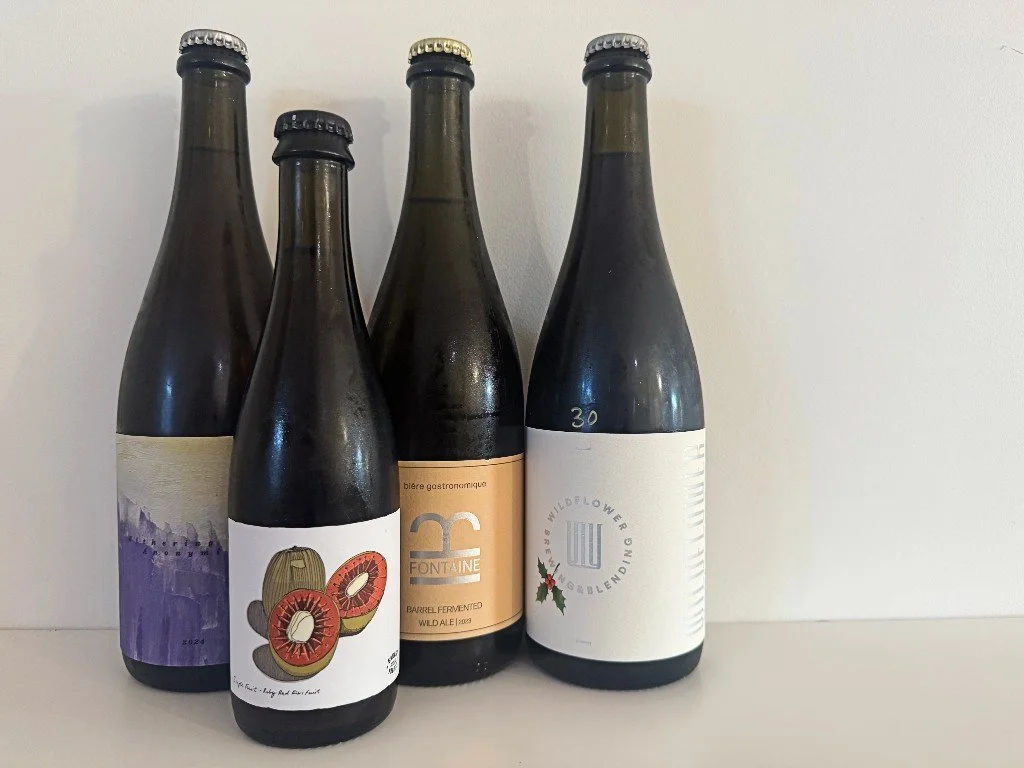
Wildflower's Withering Into Anonymity, Wild Workshop's Garage Project Single Fruit Ruby Red Kiwifruit, Fontaine's Barrel Fermented Wild Ale and Wildflower's Noel offer something for every season. Or should we say, ‘saison’?
Taking a walk on the wild side
Wild and spontaneously fermented ales are the answer to anyone who claims that “all beer tastes the same”, or that fruity beers are a modern invention. Once you start leaning into these styles, you’ll find yourself seeking them out wherever you travel.
While they’re often framed as beer-nerd pours or advanced-level cicerone territory, their roots in farming and agriculture suggest the opposite: beers designed to be shared around a table with friends and family.
As for us, we’re just about ready to head back to Belgium. Just outside Brussels sits a place called In de Verzekering tegen de Grote Dorst — “In the Insurance against Great Thirst” — famed for one of the world’s great selections of lambic and gueuze. It’s only open on Sundays. We should probably let them know to keep a couple of seats aside.